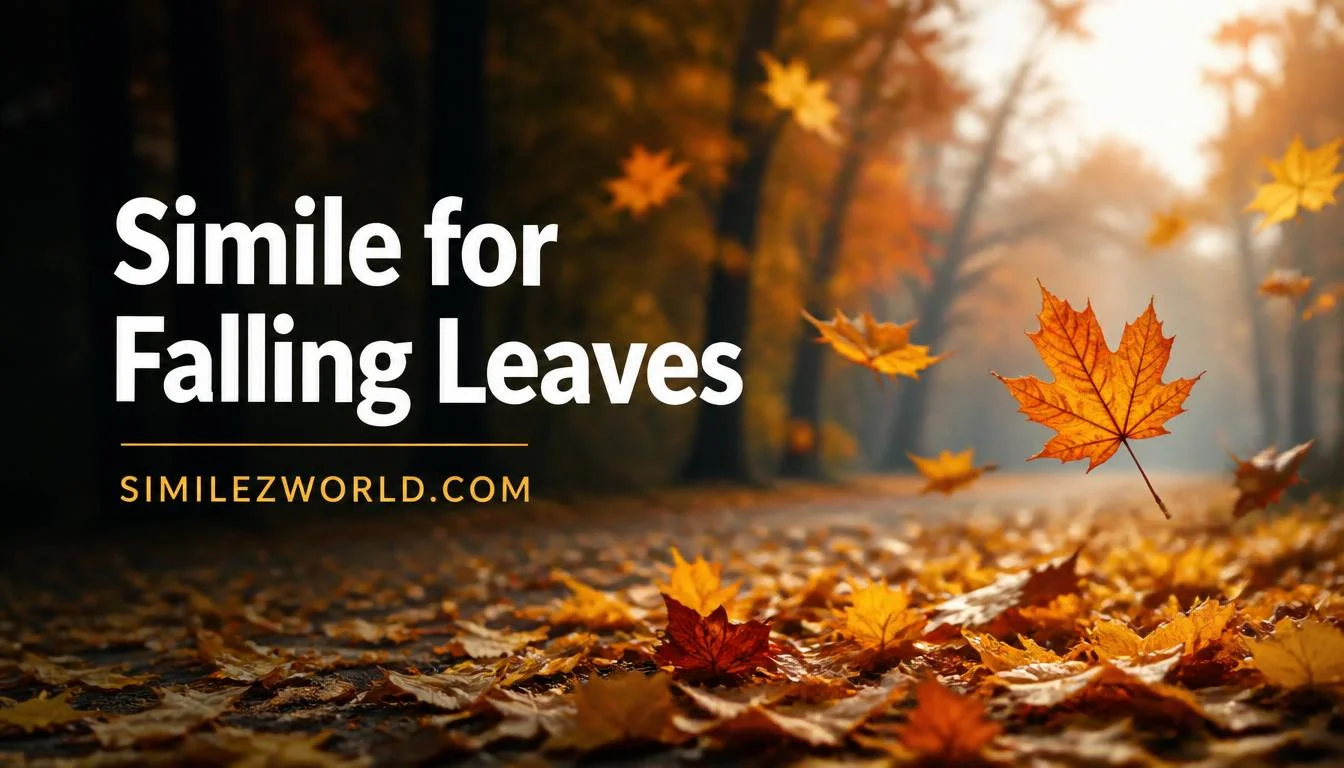
Few sights in nature are as beautiful and inspiring as leaves drifting from trees in autumn. Writers, poets, students, and storytellers often use a simile for falling leaves to describe this graceful movement in a vivid and memorable way.
A simile compares one thing to another using the words “like” or “as.” When describing falling leaves, similes help readers picture the motion, color, beauty, and emotions associated with autumn. Instead of simply saying leaves are falling, you can compare them to butterflies, snowflakes, dancers, or confetti to create a stronger image.
In everyday conversations, people often use simile for falling leaves to make descriptions more expressive and engaging. Whether you’re writing a poem, school essay, social media caption, or short story, these comparisons can instantly improve your writing.
This guide is Updated for 2026 and includes definitions, examples, comparisons, practical writing tips, and 40 creative similes for falling leaves.
What Is a Simile for Falling Leaves?
A simile for falling leaves is a comparison that describes leaves dropping from trees by using the words like or as.
Simple Definition
A simile helps readers imagine falling leaves by comparing them to something familiar.
Example:
“The leaves fell like golden snowflakes.”
This comparison helps readers visualize leaves gently floating downward.
Why Writers Use Similes for Falling Leaves
- Create vivid imagery
- Add emotion to descriptions
- Make seasonal scenes more memorable
- Improve poetry and storytelling
- Help readers visualize movement
From real-life writing experience, nature-based similes often create stronger emotional connections than plain descriptions.
How Simile for Falling Leaves Works or Is Used
A simile follows a simple pattern:
Falling leaves + like/as + comparison
Examples
- The leaves drifted like feathers in the wind.
- The leaves floated like tiny boats.
- The leaves fell as softly as snow.
These comparisons help readers see movement, color, and mood more clearly.
Common Uses
People use similes for falling leaves in:
- School assignments
- Poetry
- Creative writing
- Nature journals
- Instagram captions
- Travel blogs
- Storytelling
Examples of Simile for Falling Leaves in Everyday Life
Autumn Walks
“The leaves fell like confetti during the parade.”
This creates a festive and colorful image.
Nature Photography Captions
“Leaves drifted like butterflies across the path.”
This highlights their graceful movement.
School Essays
“The leaves floated as gently as feathers.”
This makes descriptive writing more engaging.
Poems
“The leaves danced like tiny ballerinas.”
This adds elegance and personality.
40 Simile for Falling Leaves Examples With Meanings
1. Like golden snowflakes
Meaning: Falling softly and beautifully.
Example: The leaves drifted like golden snowflakes through the air.
2. Like butterflies in flight
Meaning: Graceful movement.
Example: The leaves fluttered like butterflies in flight.
3. As light as feathers
Meaning: Very soft and weightless.
Example: The leaves floated as light as feathers.
4. Like colorful confetti
Meaning: Bright and celebratory.
Example: The leaves scattered like colorful confetti.
5. Like dancers on a stage
Meaning: Elegant movement.
Example: The leaves twirled like dancers on a stage.
6. As gentle as a whisper
Meaning: Quiet and soft.
Example: The leaves fell as gentle as a whisper.
7. Like tiny parachutes
Meaning: Slowly floating downward.
Example: The leaves descended like tiny parachutes.
8. Like pieces of gold
Meaning: Rich golden color.
Example: The leaves dropped like pieces of gold.
9. Like drifting clouds
Meaning: Slow movement.
Example: The leaves floated like drifting clouds.
10. As graceful as ballerinas
Meaning: Elegant motion.
Example: The leaves danced as graceful as ballerinas.
11. Like sparks from a fire
Meaning: Bright and lively.
Example: Red leaves scattered like sparks from a fire.
12. Like autumn rain
Meaning: Falling continuously.
Example: Leaves poured down like autumn rain.
13. Like pages from a book
Meaning: Turning and fluttering.
Example: The leaves fluttered like pages from a book.
14. Like tiny birds
Meaning: Light and free.
Example: The leaves soared like tiny birds.
15. As smooth as silk
Meaning: Soft movement.
Example: The leaves drifted as smooth as silk.
16. Like falling stars
Meaning: Beautiful and eye-catching.
Example: The leaves dropped like falling stars.
17. Like a colorful waterfall
Meaning: Large volume of leaves.
Example: The leaves cascaded like a colorful waterfall.
18. Like petals from a flower
Meaning: Delicate falling motion.
Example: Leaves fell like petals from a flower.
19. Like floating ribbons
Meaning: Twisting movement.
Example: The leaves twisted like floating ribbons.
20. As free as the wind
Meaning: Uncontrolled movement.
Example: The leaves drifted as free as the wind.
21. Like tiny kites
Example: Leaves soared like tiny kites in the breeze.
22. Like pieces of confetti after a celebration
Example: Leaves scattered like confetti after a celebration.
23. Like dancing flames
Example: Red leaves flickered like dancing flames.
24. Like paper airplanes
Example: Leaves glided like paper airplanes.
25. Like floating lanterns
Example: Golden leaves drifted like floating lanterns.
26. As delicate as lace
Example: The leaves fell as delicate as lace.
27. Like a shower of gold
Example: The leaves dropped like a shower of gold.
28. Like drifting balloons
Example: Leaves floated like drifting balloons.
29. Like tiny boats on waves
Example: Leaves moved like tiny boats on waves.
30. As peaceful as evening light
Example: The leaves fell as peaceful as evening light.
31. Like pieces of art
Example: Leaves floated like pieces of art.
32. Like scattered jewels
Example: The leaves landed like scattered jewels.
33. Like falling feathers from a pillow
Example: Leaves drifted like feathers from a pillow.
34. Like a slow-motion dance
Example: The leaves moved like a slow-motion dance.
35. Like colorful butterflies escaping
Example: Leaves fluttered like colorful butterflies escaping.
36. Like golden raindrops
Example: Leaves fell like golden raindrops.
37. Like drifting dreams
Example: Leaves floated like drifting dreams.
38. Like tiny sails
Example: The leaves glided like tiny sails.
39. Like flakes of gold
Example: Leaves sparkled like flakes of gold.
40. Like nature’s confetti
Example: Autumn leaves fell like nature’s confetti.
Famous or Popular Examples
Autumn imagery appears frequently in literature and poetry because falling leaves symbolize:
- Change
- Time passing
- Beauty
- Growth
- New beginnings
Common Literary Comparisons
- Leaves like butterflies
- Leaves like snowflakes
- Leaves like feathers
- Leaves like confetti
- Leaves like dancers
These comparisons remain popular because they are easy to visualize and emotionally powerful.
Simile for Falling Leaves vs Related Concepts
| Concept | Definition | Example |
|---|---|---|
| Simile | Comparison using like or as | Leaves fell like feathers. |
| Metaphor | Direct comparison | The leaves were golden feathers. |
| Personification | Human qualities | The leaves danced across the yard. |
| Imagery | Descriptive language | Bright leaves covered the pathway. |
| Hyperbole | Exaggeration | Millions of leaves filled the street. |
Key Difference
A simile uses like or as, while a metaphor creates a direct comparison without those words.
How to Use or Create a Simile for Falling Leaves
Step 1: Observe the Leaves
Notice:
- Color
- Speed
- Shape
- Direction
- Movement
Step 2: Think of Similar Objects
Ask:
“What does this movement remind me of?”
Examples:
- Butterflies
- Snowflakes
- Feathers
- Confetti
- Dancers
Step 3: Build the Simile
Use:
Like or As
Example:
“The leaves floated like butterflies.”
Formula
Leaves + like/as + comparison
Common Mistakes People Make With Simile for Falling Leaves
Using Overcomplicated Comparisons
Simple comparisons are usually more effective.
Choosing Unrelated Objects
The comparison should connect naturally to the movement or appearance of leaves.
Repeating the Same Simile
Using “like feathers” repeatedly can become boring.
Try fresh alternatives such as:
- Like lanterns
- Like ribbons
- Like butterflies
Overusing Similes
Too many similes in one paragraph can distract readers.
Practical Uses of Simile for Falling Leaves
For Students
- Essays
- Creative writing
- Poetry assignments
- Language exercises
For Writers
Similes help create:
- Strong imagery
- Emotional scenes
- Seasonal descriptions
For Social Media Captions
Examples:
- “Leaves falling like nature’s confetti.”
- “Autumn leaves drift like golden snowflakes.”
For Poetry
Falling leaf similes add rhythm, beauty, and symbolism.
For Storytelling
They help readers experience autumn scenes more vividly.
Related Topics You May Also Like
For deeper learning, explore:
- Similes for autumn
- Similes for trees
- Similes for wind
- Similes for nature
- Metaphors about seasons
- Personification examples
- Autumn imagery in poetry
Frequently Asked Questions
What is a simile for falling leaves?
A simile for falling leaves compares leaves to another object using the words like or as.
Why are similes used for falling leaves?
They make descriptions more vivid and help readers visualize autumn scenes.
Can students use these similes in essays?
Yes. They improve descriptive writing and make essays more engaging.
What is the most common simile for falling leaves?
One of the most popular examples is “The leaves fell like feathers.”
How can I create my own simile?
Observe the leaves, think of something with a similar appearance or movement, and connect them using like or as.
Conclusion
A simile for falling leaves is a powerful writing tool that transforms simple autumn descriptions into vivid imagery. Whether you’re describing leaves as butterflies, feathers, confetti, or snowflakes, these comparisons help readers picture the scene more clearly.
Students can use these similes to improve essays, writers can enrich stories and poems, and social media users can create more engaging captions. The key is choosing comparisons that naturally match the movement, color, or feeling of falling leaves.
As you practice, try creating your own unique comparisons inspired by nature. The more you experiment with similes, the more expressive and memorable your writing will become. Updated for 2026, these examples provide a strong foundation for creative and descriptive writing.
DISCOVER MORE ARTICLES
Simile for Garden: 40 Creative Examples and Meanings 2026
Simile for Dropping: Meaning, Examples, and Complete Writing Guide 2026
What Is a Simile for Being Excited? Meaning, Examples & Complete Guide 2026
